Site Impressions and Attitudes
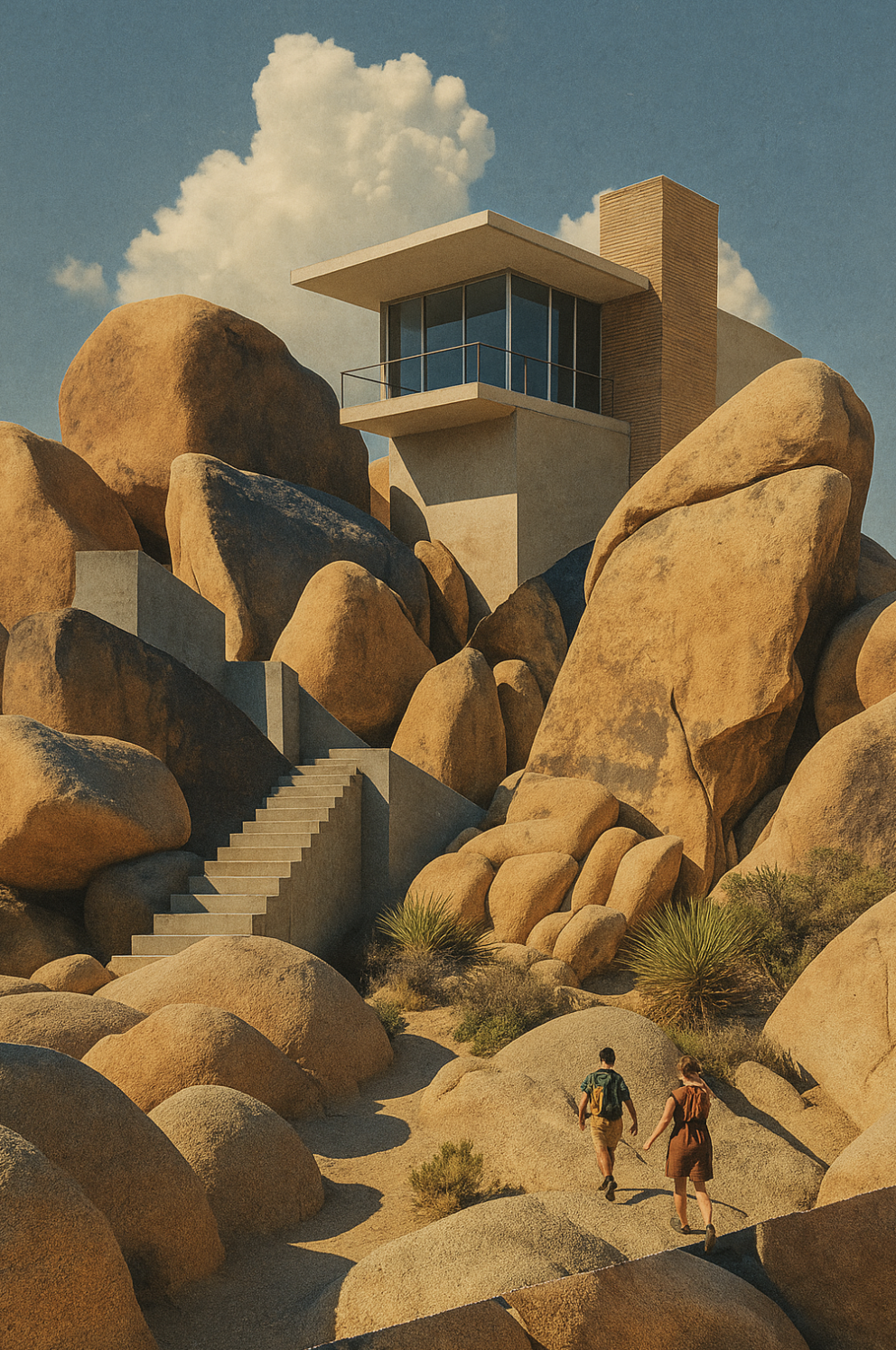
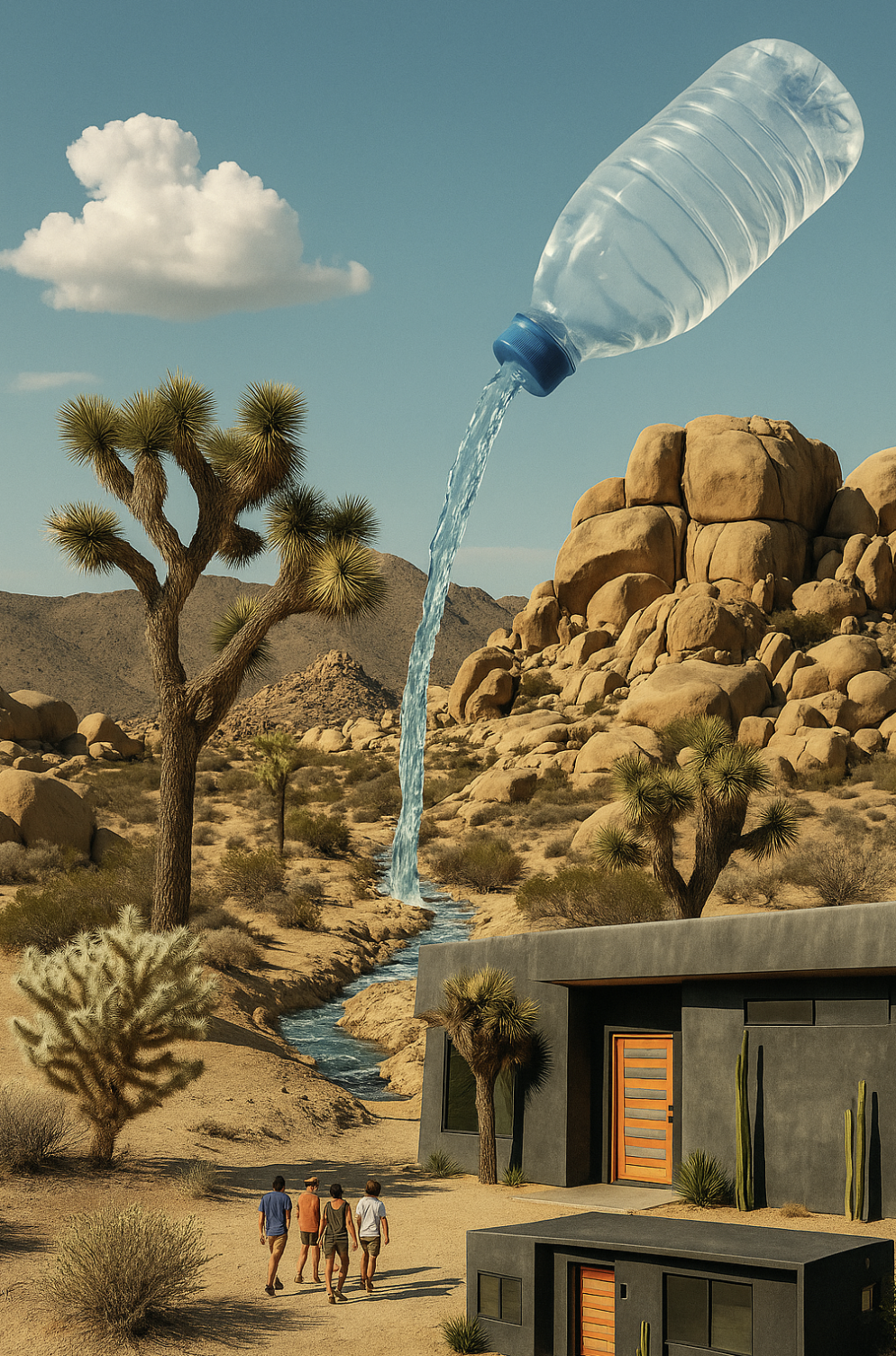
A few collages inspired by the site conditions and elements of the Joshua Tree Desert in California.
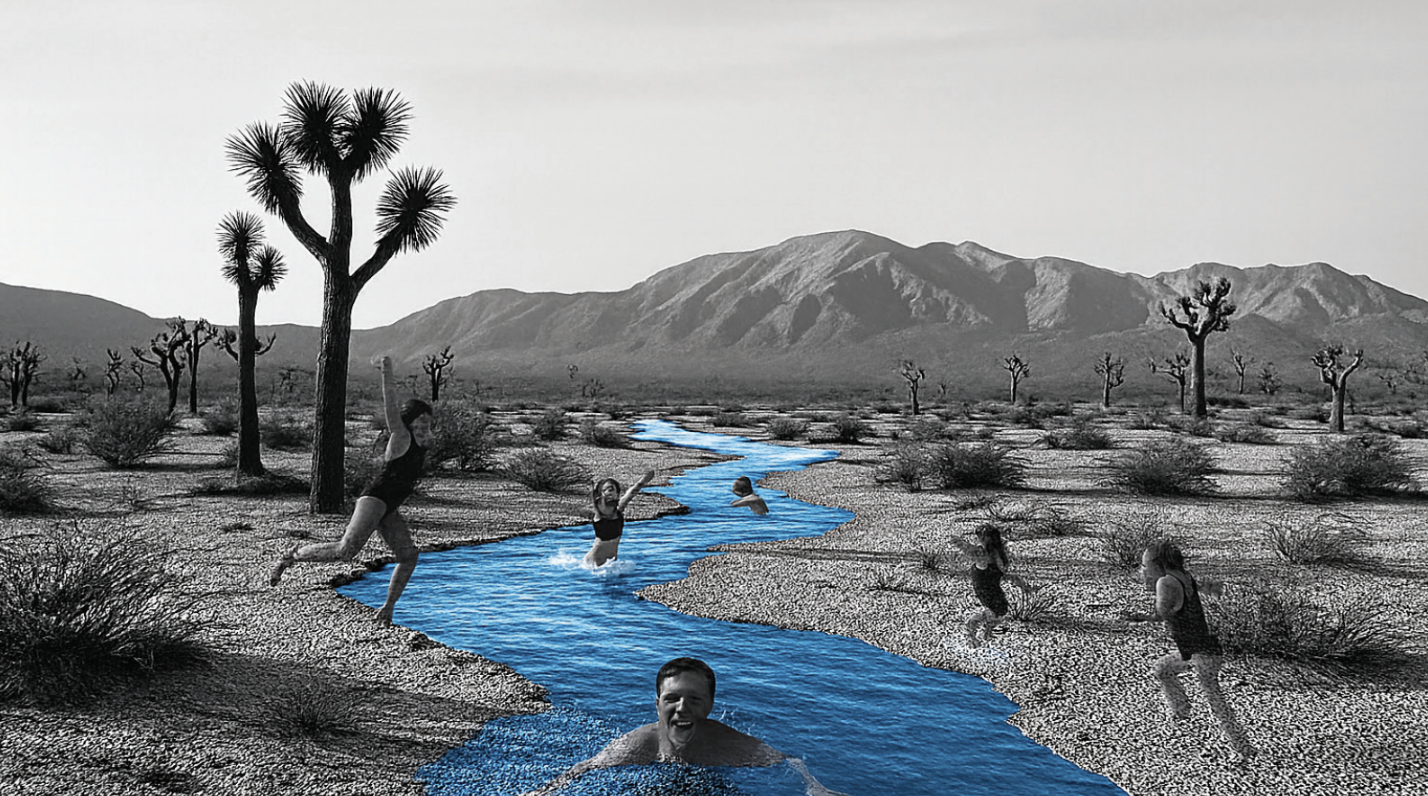
This collage highlights the absence of water in Joshua Tree by introducing a river as the central figure. The blue water symbolizes life, survival, and desire, while the tourists using it reflect how we consume limited resources in fragile environments. By contrasting the lively water with the barren black-and-white desert, the collage critiques both ecological scarcity and human impact on the landscape.
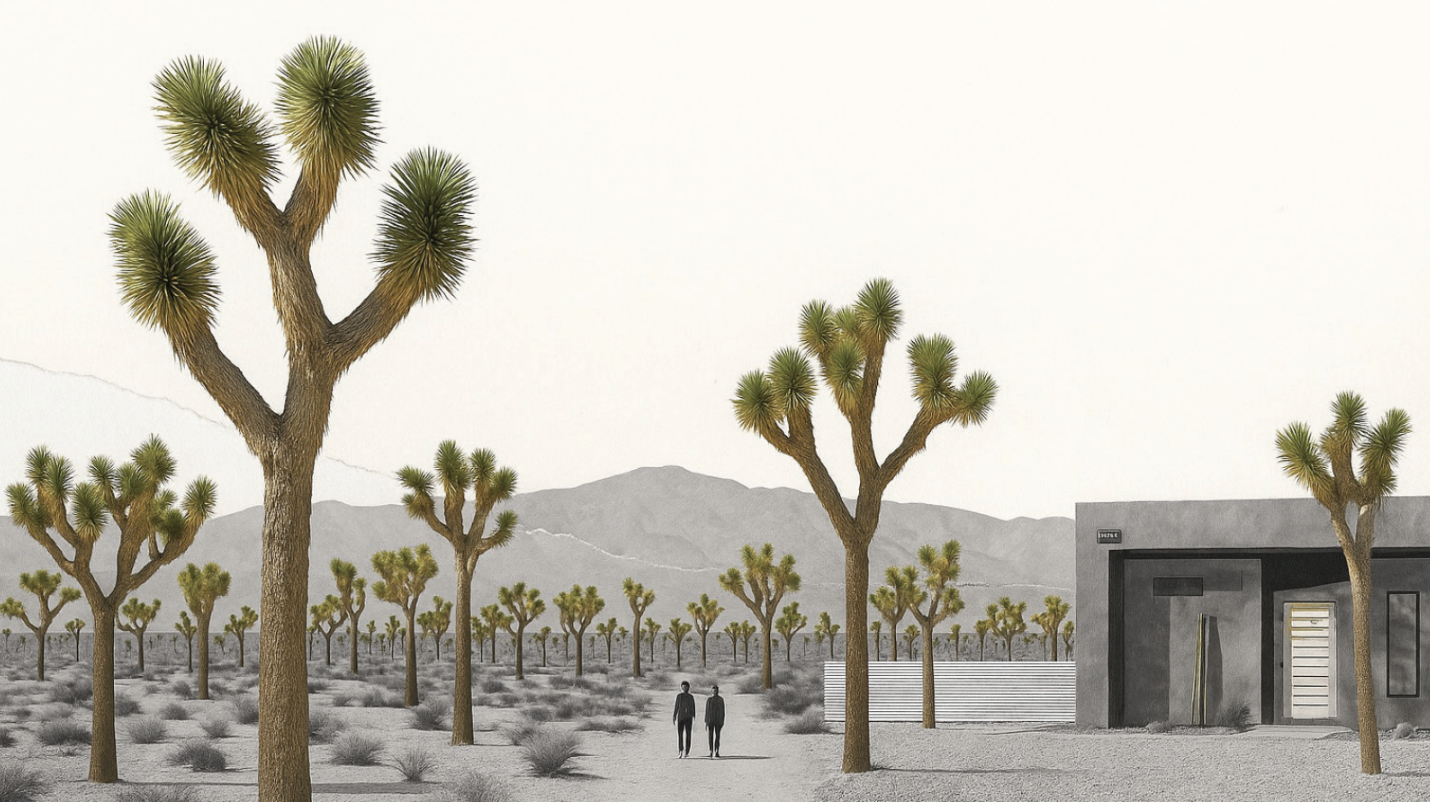
This collage emphasizes the dominance and resilience of Joshua trees in the desert landscape. Their density and repetition highlight how they form the true backbone of this fragile ecosystem, shaping the character of Joshua Tree far more than human intervention ever could. The scattered human figures and isolated structure appear minimal and secondary, reminding us that in this environment, humanity is outnumbered and overshadowed by nature’s enduring presence. By framing the Joshua trees as the prevailing force, the collage underscores the importance of respecting and preserving the natural order in which they thrive.
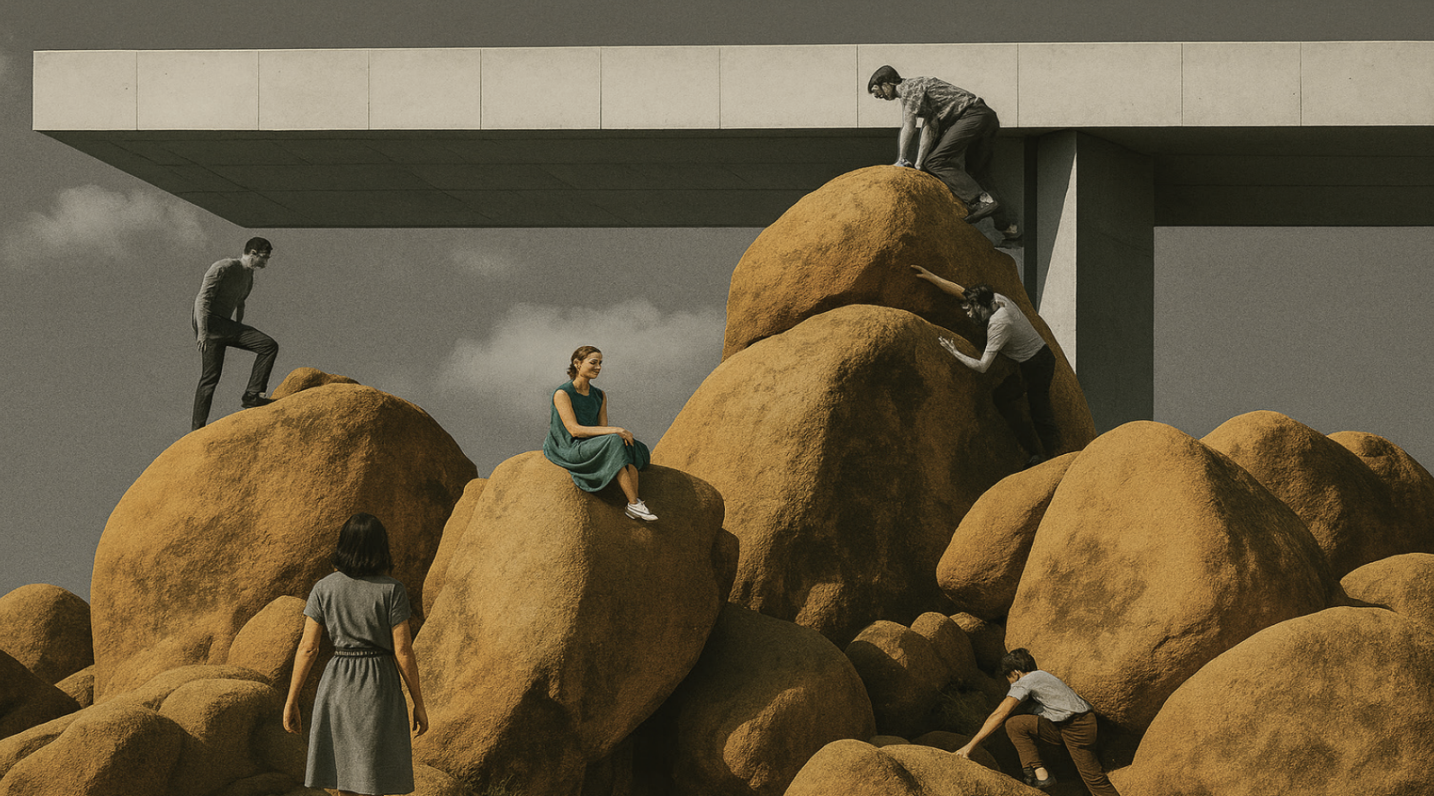
This collage draws from the iconic rock formations of Joshua Tree, whose massive boulders represent nature’s raw, time-carved geometries. Their organic forms, shaped by erosion and desert winds, stand in stark contrast to the hovering rectilinear structure above them. By placing human figures in between, the work highlights the tension between the permanence of natural landscapes and the rigid order of human-created architecture. It reflects on how, in Joshua Tree, the sublime irregularity of nature resists being fully framed or controlled, reminding us that architecture always negotiates with the environment it inhabits.